
Reshaping the Energy Insurance Market
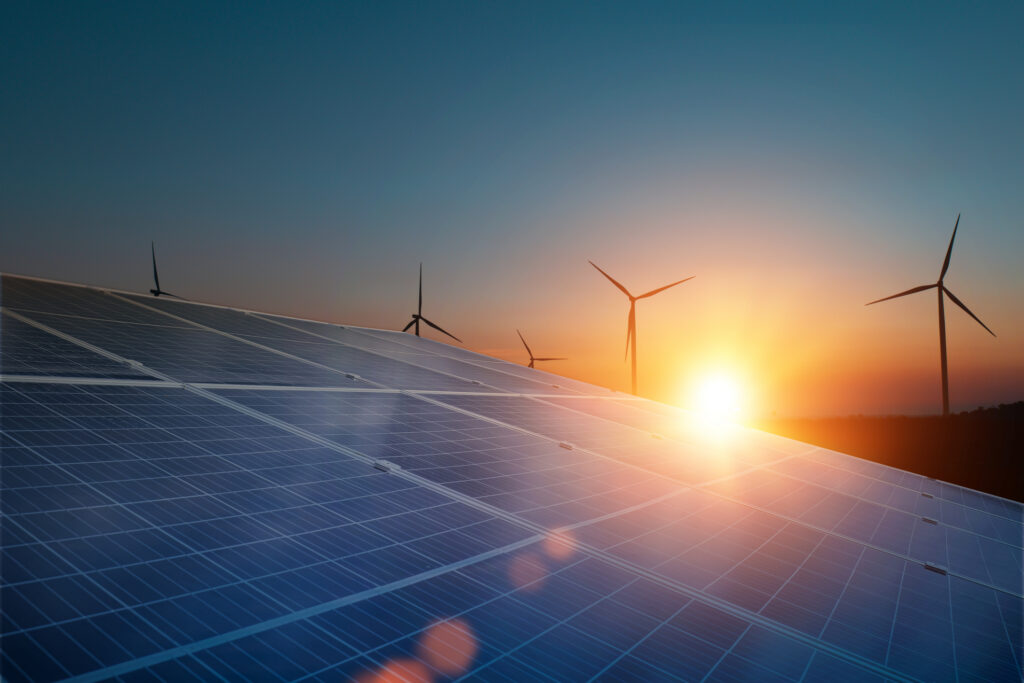
The 2025 One Big Beautiful Bill Act (OBBBA) is set to reshape the renewable energy industry through dramatic changes to tax incentives, foreign entity restrictions and regulatory requirements. In this session at RIMS 2026, industry leaders discuss the impact of an accelerated phase-out of renewable tax credits targeting wind and solar projects and of foreign entity of concern (FEOC) restrictions, as well as the resulting widespread disruptions to financing. Speakers included:
- John Katilus – Managing Director US Property Renewables Placement Leader, Aon
- Geoffrey Lehv – Senior Vice President, Head of North American Accounts, kWh Analytics
Legislative Level Set
The Inflation Reduction Act (IRA) provided a 10-year runway for tax credits supporting renewable energy. The One Big Beautiful Bill Act (OBBBA) drastically changed this landscape by accelerating the phase-out of the Investment Tax Credit (ITC) and Production Tax Credit (PTC), while also imposing tighter construction timelines. What was previously a 10-year window to begin construction was effectively reduced to a one-year timeframe. As a result, approximately $35 billion worth of projects were canceled. From an insurance perspective, this shift has led to the introduction of early-works policies.
The December 31, 2027 placed-in-service deadline required that construction be completed by that date. However, organizations that began construction by the July 4, 2026 deadline were granted an additional four years to complete their projects. As a result, many projects will continue to benefit from tax incentives through 2030 if they met the initial construction deadline.
Impacts of the OBBBA
While solar is no longer a nascent technology, battery energy storage systems (BESS) at scale remain relatively new, as does large-scale solar deployment. Notably, BESS fared well under the OBBBA, remaining largely untouched and retaining incentives through 2032 to support grid stability.
In terms of asset valuation, the OBBBA significantly altered the ability to qualify for “start of construction,” which in turn created immediate impacts on valuations and drove increased mergers and acquisitions activity.
Why Does This Moment Matter?
Project timelines have accelerated significantly, requiring faster execution, earlier procurement, and increased storage of large equipment. At the same time, the cost of capital is rising. These pressures are compounded by extreme weather events, which are compressing return periods and introducing greater uncertainty due to limited historical data on emerging perils.
Unprecedented Levels of Demand
Demand for electricity is rising rapidly, particularly due to data centers. It is projected that 16% of all North American electricity will be consumed by data centers, up from approximately 4% today. By 2060, 80% of data center energy demand is expected to come from artificial intelligence (AI), with the sector consuming approximately 11% of global electricity.
The energy load of these facilities is substantial. A single AI data center can require approximately 1,500 megawatts (MW), which is roughly 50 times the energy demand of 800 homes occupying a similar land footprint. Currently, regulatory systems and legislation are not equipped to address this level of demand within such a compressed timeframe.
Electricity Supply Increasing Exponentially
Meeting this demand will require a significant expansion of electricity generation. In 2025, approximately 4,452 trillion watt-hours (Wh) of electricity were generated globally, and this figure will need to nearly double by 2060. Gas turbines and nuclear power may help bridge the gap, while solar generation is expected to increase fivefold. BESS will play a critical role in supporting this growth.
There Is No Silver Bullet
There is no single solution to meet future energy needs. Lead times for new combined-cycle gas power plants have increased to approximately five years, with costs rising by 49%, according to BloombergNEF (BNEF). Small modular reactors (SMRs) are not a near-term solution, as a critical mass of deployments is unlikely before the 2040s.
Solar Photovoltaics at Scale Is Here to Stay
Solar photovoltaic (PV) technology has become a cornerstone of future energy generation. By 2060, solar power is expected to account for 47% of global electricity generation, representing a fivefold increase from 2024 levels. As a result, effective risk mitigation is essential. Over the coming years, it will be increasingly important to better quantify and manage natural catastrophe (NatCat) and attritional perils affecting these assets.
What Does It All Mean?
Solar, wind, and battery technologies are already being deployed at scale and are increasingly competitive with fossil fuels, even without subsidies. This transition is not theoretical or long-term; it is happening now. As such, strong risk management practices are essential to ensure energy resilience and reliability.
Potential Headwinds
- Extreme weather events: Hail was not historically considered a major peril in this sector, yet it now represents approximately 6% of loss events while accounting for 73% of total losses in solar. These risks are difficult to model. Wildfire and brush fire exposures have also proven more significant than expected, often due to vegetation management challenges. Mitigation strategies, such as panel stowing, thicker panels, and more robust racking systems, continue to evolve in response to changing climate conditions.
- Cyber exposure: Inverters, Supervisory Control and Data Acquisition (SCADA) systems, and hyperscaler control planes are converging. A single compromised original equipment manufacturer (OEM) platform can disrupt an entire fleet and trigger business interruption claims across multiple insureds.
- Serial loss concentration: Safe-harbor purchasing led to fleets using similar vintages of panels, trackers, and BESS. As a result, a single defect or event, such as a hailstorm, can cascade across multiple projects and policy years.
- Terrorism Risk Insurance Act (TRIA) renewal risk: The federal backstop is currently set to sunset at the end of 2027, creating additional uncertainty for insurers and insureds.

Safety National is a proud sponsor of Kids' Chance of America, a charity that provides need-based educational opportunities and scholarships for the children of workers seriously injured or killed on the job.
Search By Month
Recent Posts
- Learning From Other States to Find Solutions for Claims Cost Containment, AI Adaptation, and More
- Reefer Madness: Still in the Weeds with Medical Marijuana and Workers’ Compensation
- Reshaping the Energy Insurance Market
- There Is No Spoon: How Website Tracking Technologies Spark Litigation
- Managing AI Risks When Onboarding Vendors